Samantha F.
★★★★★
“It doesn’t hype AI, and it doesn’t scold academics for being overwhelmed. It actually understands the reality of modern academia and offers a clear, usable way forward.”
Read on Amazon →Home › Shop › Using AI properly › The AI-Powered Scholar
For graduate students and researchers using AI in their work
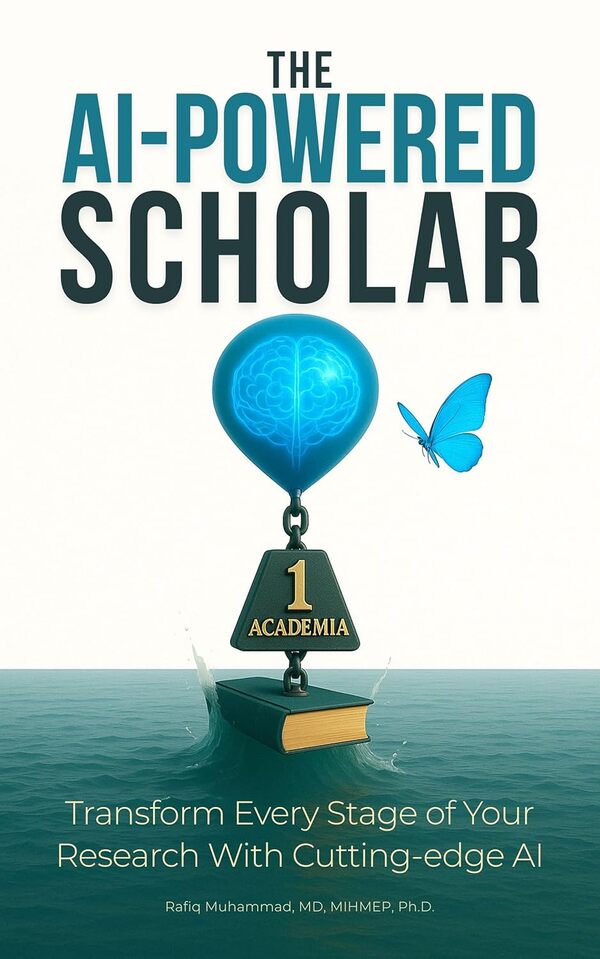
The AI-Powered Scholar
A stage-by-stage guide to integrating AI into the research lifecycle, from ideation and literature exploration to design, analysis, writing and dissemination, built around the IDEAS framework and practical tool stacks for each stage.
By Dr. Rafiq Muhammad, MD, PhD · 338 pages · A stage-by-stage guide · Paperback $24.99 · ★★★★★ 24 reader reviews
What readers say
★★★★★ 24 reader reviews from Amazon
“It doesn’t hype AI, and it doesn’t scold academics for being overwhelmed. It actually understands the reality of modern academia and offers a clear, usable way forward.”
Read on Amazon →“… this book helped define a purpose and course for using AI without falling into traps where others may consider it cheating or untrustworty.”
Read on Amazon →“It also gives you different AI tools to help you in the different stages you’re in while doing your dissertation.”
Read on Amazon →“It is not to be used to cheat and this books explains that very well.”
Read on Amazon →“This book really shows how AI can be a great tool and not a replacement.”
Read on Amazon →“It's not just a list of tools; it provides a comprehensive framework for using AI responsibly and ethically as a research partner, not just a replacement for human work.”
Read on Amazon →“It will making researching and writing much easier and faster”
Read on Amazon →“The book clearly demonstrates how AI tools can be used responsibly and effectively at every stage of the research process, from idea generation and literature review to writing and organization.”
Read on Amazon →“This isn’t just useful for academics but for life in general.”
Read on Amazon →“The book explains practical strategies for integrating AI into academic work while emphasizing ethics and critical thinking.”
Read on Amazon →“I appreciated that this author focused on the benefits that AI can have in providing better, more efficient tools.”
Read on Amazon →“Use this book if you want to use AI for research and make it better.”
Read on Amazon →“Other books written about this subject are shallow, but this book has a step-by-step framework for using AI across research stages.”
Read on Amazon →“Practical, easy to follow, and full of strategies that save time while improving results.”
Read on Amazon →“It is a very lengthy read but I took a lot away from it due to recently breaking into an AI geared career.”
Read on Amazon →“Has a lot of information on how AI can help and make things easier”
Read on Amazon →“Very well written and explanation of the integration of AI into scholar/executive functioning.”
Read on Amazon →“The text includes practical exercises, like taking a research question and exploring how AI might aid in designing a study, which makes the book highly actionable.”
Read on Amazon →“I truly enjoyed every minute of reading this one.”
Read on Amazon →“Bizarre but very thought invoking. I encourage everyone to read it just to see how you feel about it.”
Read on Amazon →“This book doesn’t just talk about AI in theory — it shows you how to put it into action.”
Read on Amazon →“What stood out most to me is how it frames AI as a partner in the research process, not a replacement for your own thinking.”
Read on Amazon →“I also heavily appreciated the section I thought I was going to be the most weary of: using ai to help with writing.”
Read on Amazon →“What sets this book apart is its clarity and actionable advice. It doesn't just theorize; it provides specific, step-by-step instructions and prompts for using a variety of AI tools.”
Read on Amazon →Sound familiar?
“There are a hundred AI tools and I don't know which ones matter.”
“I'm afraid AI will make up citations.”
“I don't know what my institution allows.”
“I want to work faster without compromising my integrity.”
AI is most useful when it is matched to a stage of the research, and governed by clear rules. A framework for the whole lifecycle, and a short list of tools for each stage, makes AI a research partner instead of a risk.
How it works
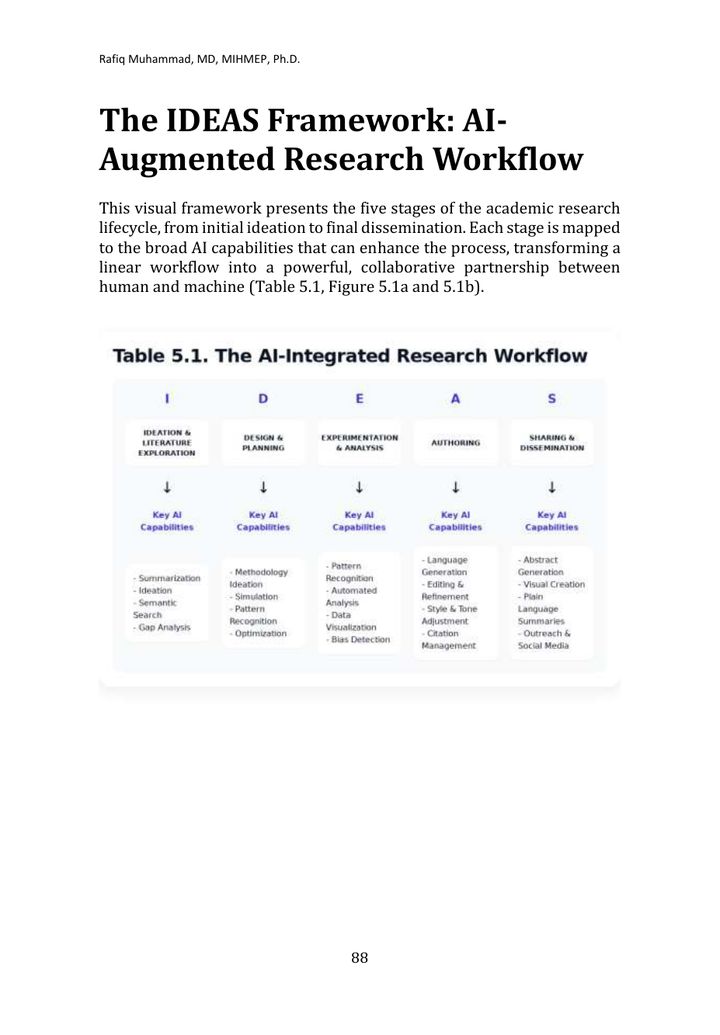
The IDEAS framework follows the research lifecycle.
Use AI to explore the literature and develop the research idea.
Plan studies and work with data, with AI support at each step.
Draft, revise and disseminate your work, with transparency about AI use.
What you will have
Look inside
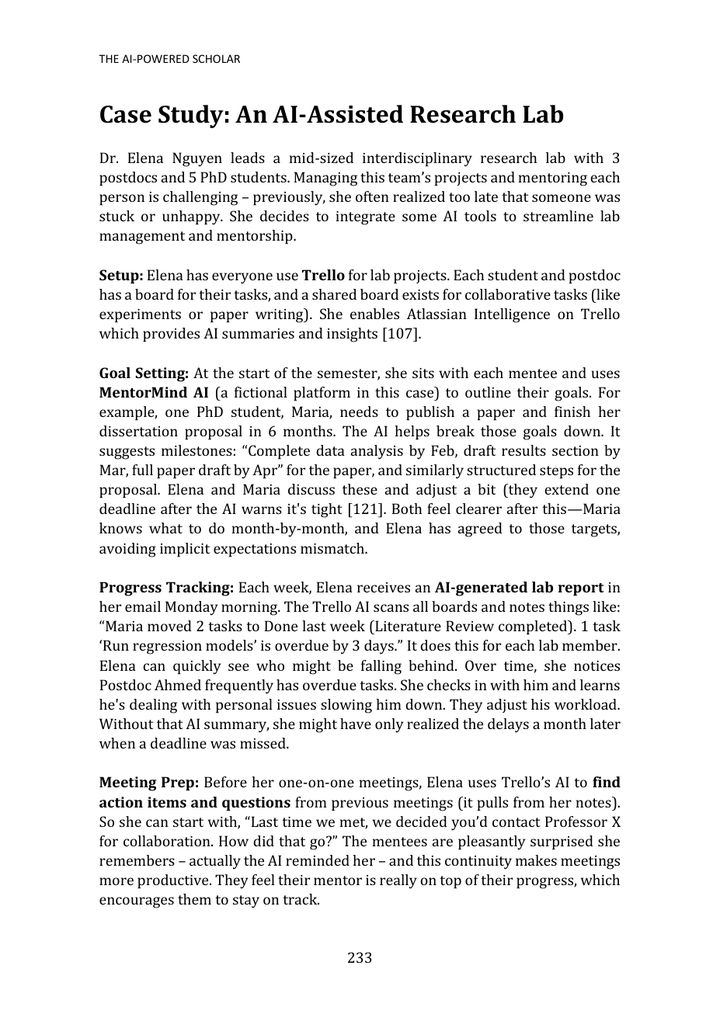
Guided exercises, case studies with hands-on activities, and quick-reference tables. These are real pages. Tap to enlarge.
Is it for you?

Clinician-researcher, PhD from Karolinska Institutet, and author of the Mastering Research books and workbooks, used by graduate students from the research question to the viva.
Choose your format
Not ready to buy? Get the free toolkit for using ai properly by email and start today. Get it free
Questions
No. It is a practical guide for researchers, not a coding or machine-learning textbook.
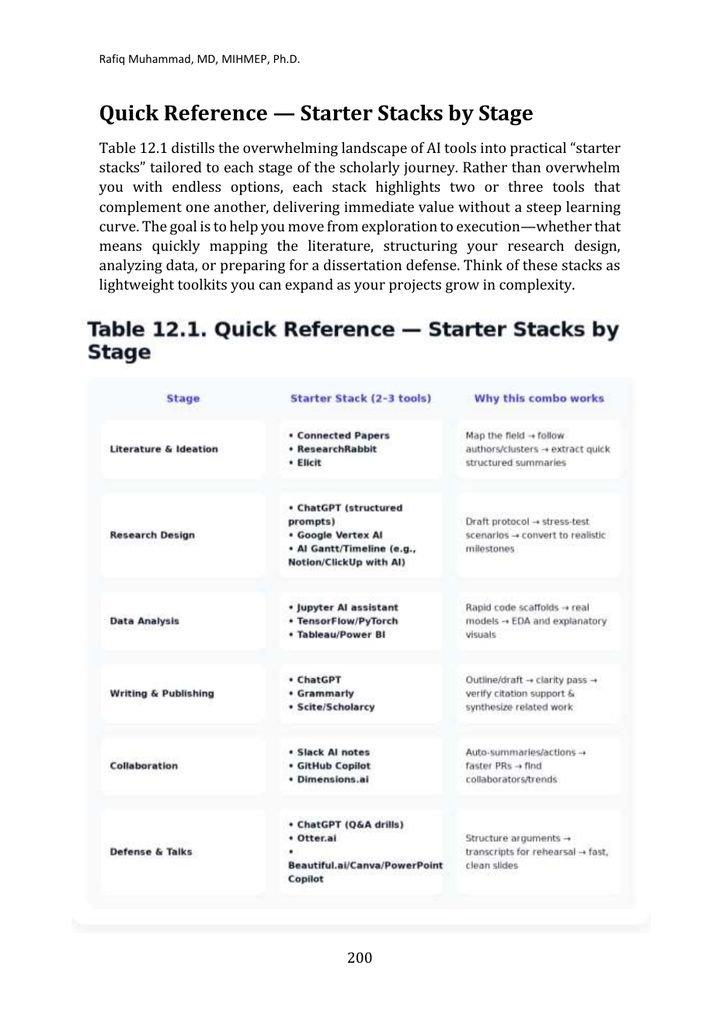
It organises tools into starter stacks for each stage of research, and an appendix lists AI tools for academia (2025 edition).
Yes. A chapter covers the defense, with a case study and a hands-on AI-powered mock defense practice.
The book covers ethical and transparent AI use. For an example disclosure statement and a checklist, read how to disclose AI use in your thesis.
A framework for every stage, and the guardrails to use it well.
Choose your formatMore for this stage: everything for using ai properly · the free toolkits